English
  العربية
  Español
  Deutsch
  Français
  Português
  Русский
  日本語
日本語  Italiano
  Nederlands
  Svenska
  Suomi
Suomi  ไทย
ไทย  Dansk
Dansk  Ελληνικά
  Bahasa Melayu
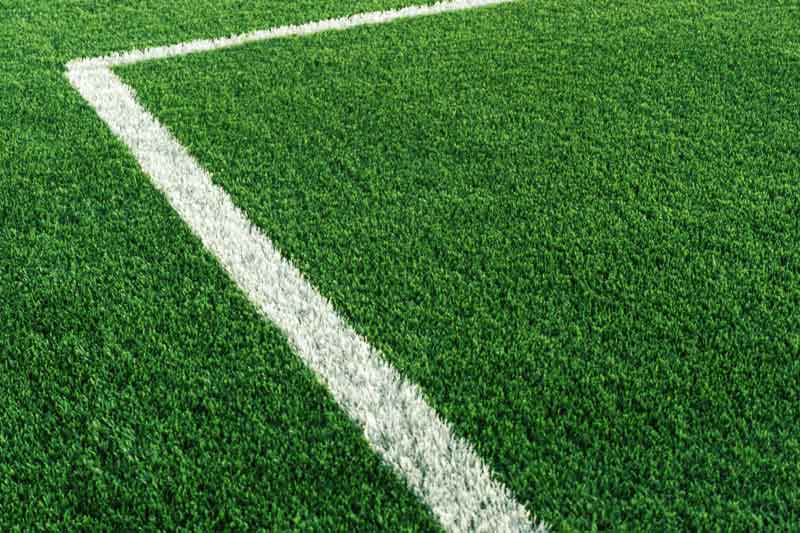
Why are more people using artificial grass to build football fields?
Have you ever been tempted by a quote of $8 per square meter for natural turf at the start of a project?
But just 24 months later, irrigation pump failures caused waterlogging and suspension of play, bald turf requiring emergency resurfacing, and endless maintenance delays during the rainy season…
These constant “hidden cost pop-ups” have led 85% of stadium managers to turn to artificial turf for football fields.
In many schools, sports stadiums, or government projects, the budget for soccer field construction is often the most important consideration for decision makers. Many people’s first reaction is that “natural turf is cheaper” because of its low initial cost and low material costs.
However, when the project was actually put into use, more and more managers found that the real cost of the lawn was far more than just “construction”.
Natural turf grass carries numerous hidden costs in its daily use—including frequent maintenance, irrigation, mowing, fertilization, pest control, and weather-related downtime. These expenses accumulate over several years, often making even “cheap” turf grass expensive. Worse still, frequent use can easily damage natural turf, which not only impacts the playing experience but also poses safety and reputational risks.
In contrast, fake grass has rapidly become the mainstream choice for schools and professional stadiums worldwide over the past decade. While its initial investment is slightly higher, its longer lifespan, lower maintenance costs, and all-weather availability make it a more cost-effective long-term investment for more and more project owners.
Especially for high-frequency usage scenarios such as schools, sports contractors, and government agencies, artificial turf grass can not only significantly reduce operational pressure, but also improve the user experience and venue image.
This article will analyze the whole process from football field construction to maintenance, and how your artificial grass pays for itself in just a few years.
Turf Field Installation Cost
When it comes to soccer turf field construction, many people often only focus on the difference in “material quotes,” overlooking hidden costs like construction time, weather impacts, and field delivery time. For schools, stadiums, or government projects, every day saved on construction time can translate into an extra $1,850.
Natural Grass Football Field Cost
On the surface, the material cost of natural turf is low, but there are many complex links in the construction stage:
- The initial preparations are cumbersome: a thick layer of planting soil and a matching irrigation and drainage system are required to ensure the long-term growth of the lawn, which takes 10-25 days.
- Long construction period: From land leveling, sowing, maintenance to turf survival, it usually takes 2-3 months. And after laying, the lawn still needs additional growth time before it can be put into use. During the rooting period (21 days), the grass seedlings are not allowed to be trampled on, and a temporary rain shelter must be built during the rainy season (average daily cost $320).
- Significantly affected by the weather: The rainy season can easily lead to waterlogging in the soil, construction interruptions, and an extended overall construction period.
For sports venue contractors or project investors, these variables mean a longer payback period. Delayed delivery of venues can also impact school enrollment seasons or event schedules, resulting in potential revenue losses.
Artificial Turf Installation Cost
In comparison, the synthetic grass installation is more standardized and controllable, with only four main steps required: base layer, anti-seepage layer, buffer layer, and turf laying.
- Gravel base layer (5-7 days), 10cm graded gravel compacted, permeability > 30mm/h, laser leveler controlled slope error < 0.8%.
- Anti-seepage membrane laying (1 day), cross-welding HDPE membrane, seam strength must pass a 15kPa water pressure test.
- Elastic buffer layer (2-3 days), laying SBR/TPE particle mixed layer, the impact absorption value is strictly controlled in the range of 55-70%.
- Grass laying (3-5 days), using a German C-type tufting machine, the grass height error is controlled within ±1.5mm.
The synthetic turf field generally takes only 2-4 weeks from construction to completion, and can be delivered in a short time and put into use immediately.
Hidden Cost of a Football Field
The Hidden Costs of Natural Grass
In the long-term use of natural lawns, there are a lot of expenses that are easily overlooked(Taking an 11-a-side football field as an example):
- Irrigation system and utility costs: Daily lawn maintenance requires significant water and electricity. Annual irrigation water consumption: 18,000 tons (approximately the annual water consumption of 150 households). Especially in drought-prone or hot regions, water costs can become a major operating expense.
Electricity costs: The water pump and sprinkler system consume 9,600 kW·h (approximately $1,850) annually.
- Regular reseeding and resurfacing: Fields with high usage (such as schools or clubs) are prone to turf wear and exposed areas, which require reseeding or even complete replacement every year or two. 30% of the alopecia areata area (approximately 2,400 m2) needs to be replaced each year, and the material + labor cost is approximately $6,800. Every two years, the cost of resurfacing the entire field, disinfecting the soil and planting new grass starts at $28,000.
- Pest and disease control: Natural grass is extremely susceptible to fungal and pest attacks, requiring not only professional pesticides but also regular inspections by maintenance personnel, which increases labor costs.
| Annual control costs | Loss of games lost | |
| Fusarium wilt | $3,200 | Field closure for 15 days |
| Spodoptera frugiperda | $1,500 | Local suspension for 10 days |
| Moss spread | $800 | 8 training sessions canceled |
- Rainy season shutdown and repair: Heavy rain can easily lead to waterlogging or mud. Repairs are required after each rainstorm: drainage ditch cleaning + soil turning and drying ($1,200/time). Furthermore, the venue had to be temporarily shut down, which added further losses.
The combination of these factors means that the annual maintenance costs of natural grass often exceed the initial budget by 30%-50%.
Artificial Turf Field Cost
In contrast, astro turf offers a more transparent and stable cost structure:
- The initial investment is slightly higher, but it requires no long-term investments like irrigation systems, fertilization, and pest control.
- It is climate-independent, with no additional operating expenses due to rainy seasons, droughts, or seasonal changes.
- Once laid, it lasts 8–10 years, requiring only basic cleaning and minimal maintenance throughout its lifespan.
This means that project parties can clearly understand the budget for the entire usage cycle in the early stages without having to worry about “additional expenses later.”
After your football field project is completed, in the 25th month, the cumulative expenditure on natural turf will exceed that on artificial turf. By the second or third year, as the costs of water, electricity, repairs and reseeding accumulate, the total expenditure often exceeds that of artificial turf by more than 30%. Artificial turf, on the other hand, requires only minimal maintenance to remain in good condition during its 8-10 year lifespan.
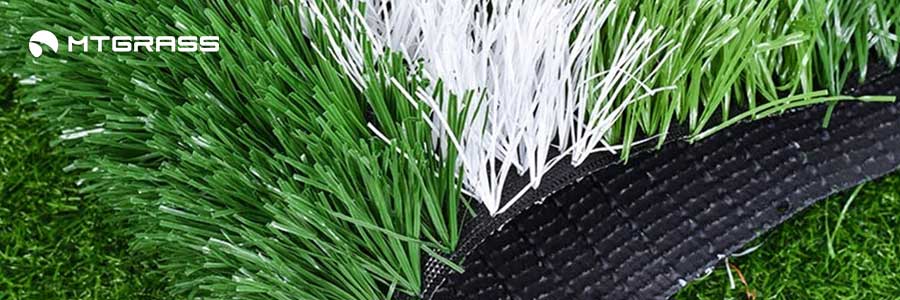
Long-term maintenance: natural turf VS fake grass
What truly impacts the overall investment in a football field project is its long-term maintenance costs.
For schools, stadium contractors, and government agencies in particular, the ongoing maintenance of the field after completion represents the core expense.
Natural lawn: Frequent maintenance and rising costs
Natural lawns require significant effort, resources, and time for daily maintenance.
Weekly mowing, watering, and fertilizing are necessary to maintain the lawn’s density and resilience. Regular pesticide spraying is also necessary to control insect pests and fungal infections, ensuring the turf’s health.
- Maintenance-intensive: pruning is required 1–2 times per week on average; 52 times × 3 hours = 156 hours (requires 2 workers);
- Fertilization: 12 times × 2 hours = 24 hours
- Pest control: 18 times × 4 hours = 72 hours
- Waterlogging management: 35 hours averaged during the rainy season
- High water and electricity costs: Annual water and electricity costs for irrigation can account for 40% of total maintenance costs.
- Herbicide: $1,200/year (carcinogens require special storage)
Compound fertilizer: $2,800/year (containing 35% nitrogen, phosphorus and potassium)
- Wear and Resurfacing: For frequently used soccer fields (such as schools and club training grounds), the turf can be severely worn and may require extensive reseeding or resurfacing every 2–3 years.
Artificial turf: lightweight maintenance and manageable budget
In contrast, artificial football turf is much simpler to maintain.
Because the artificial grass is made of high-strength synthetic fibers that won’t wither or become diseased, it doesn’t require watering, fertilizing, or weeding.
- Simplified maintenance: Simply clean the surface of debris regularly, check for uniform filler particles, and top up with sand as needed.
- Reduces labor costs: Regular cleaning staff can perform routine maintenance without the need for a dedicated gardening team.
- Uninterrupted use: Even after rain or in hot weather, the lawn can be used normally, eliminating the need for a lawn recovery period.
- Low long-term costs: Overall maintenance costs are only about one-third of natural lawns, with more stable and predictable expenses.
This means that for schools or government projects with long operating cycles and frequent use, artificial turf can significantly reduce annual budget pressure and reduce downtime caused by maintenance.
Service life and utilization rate: artificial turf VS natural turf
In a sports stadium project, the lifespan and usable duration of the turf directly determine the return on investment. Ultimately, how long a field can be used and how many times it can be used impacts the balance between revenue and costs.
Natural turf: short lifespan and limited use
The service life of natural lawns is generally only 3-5 years. Generally, the turf density decreases by 38% in the third year and must be partially replaced.
In the fifth year, soil compaction required a complete site renovation (cost ≈ 65% of the initial investment).
Turf is easily affected by weather, temperature and human flow. When there are frequent competitions or training, the grass roots are severely damaged and often need to be suspended for repair.
In addition, natural grass is almost unusable in extreme climates such as rainy days and winter, and is prone to water accumulation, ice or turf rot.
According to statistics, natural grass fields are closed for maintenance 20-30% of the time each year, which means that nearly one-third of the time they are unable to generate income. On average, the annual losses due to waterlogging maintenance during the rainy season, grass dormancy in winter, and post-race repairs are around $100,000.
Artificial grass: longer use and higher utilization rate
In contrast, artificial turf typically has a service life of 8–10 years, with its performance stable and not significantly affected by climate or frequent use.
Artificial turf drains quickly after heavy rain and remains functional even in extreme weather conditions (-15°C to 50°C).
Whether in scorching sun, high temperatures, rain, or snow, artificial turf remains functional, ensuring all-weather access. This allows schools, clubs or government programs to conduct training, competitions and activities year-round, maximizing field utilization. More importantly, artificial turf does not require a “repair period” or a “rest period”, and daily maintenance is also very simple and does not affect its use at all.
Comparison of usage intensity over ten years
| Index | Natural Turf | Artificial Turf (FIFA Standard) |
| Total Usage Hours: | 16,000 Hours | 43,800 Hours |
| Hourly Depreciation Cost: | $11.25/hour | $4.57/hour |
Conclusion
After comparing them, it’s easy to see that:
Natural turf may appear to have a lower initial cost, but subsequent maintenance, repairs, and downtime costs increase the overall investment.
Artificial turf, while slightly more expensive upfront, offers real long-term returns through lower maintenance costs, a longer lifespan, and increased field utilization.
Whether in terms of construction time, routine maintenance, service life, or environmental performance, artificial turf football fields offer greater cost-effectiveness and more manageable operating costs.
For schools, clubs, stadium builders, or government projects, this isn’t just a material choice; it’s a sustainable investment strategy—ensuring every penny is spent where it truly creates value.
Why Choose Mighty Grass?
As a FIFA approved Turf Manufacturers with over 20 years of manufacturing experience, MightyGrass has provided high-quality artificial turf solutions to schools, stadiums, and government projects in over 160 countries worldwide.
Our group not only provides professional design and construction support, but also customizes the most suitable football field turf system based on the climate, budget, and usage requirements of each region.
If you’re planning a soccer field project, contact us and let MightyGrass help you create a high-return, low-maintenance, sustainable artificial grass soccer field.
FAQ
How to install artificial turf?
The artificial turf installation process:
- Clean the ground. Remove weeds and debris, ensuring the site is level with a slope of ≤0.8%. Build drainage ditches.
- Laying the base layer. First, lay a 10-15cm layer of crushed stone and compact it. Then, cover with a weed-proofing sheet (geotextile) and secure the joints with nails.
- Spreading the turf. Unroll the turf in a uniform direction and air it for 24 hours to release any tension. Cut it to the desired size, leaving a 2-3cm margin.
- Gluing the joints. Apply special glue to the joints (air temperature >5°C). Air dry until 80% dry, then press the joints together and tap firmly with a rubber hammer.
- Securing the edges. Use U-shaped nails or ground spikes every 30cm, focusing on reinforcing the edges and joints.
- Adding granules. Evenly spread quartz sand and rubber granules (filling height should be 2/3 of the remaining turf height). Use a sand filling machine to level the turf.
- Inspection and maintenance. Use a stiff-bristle brush to straighten the turf and remove debris. Check drainage after heavy rain.
How long can an artificial grass sports field last?
- The lifespan of fake grass for sports fields is typically 8-15 years, depending on the material quality, frequency of use, and level of maintenance.
- High-end materials (such as a PE/nylon blend) combined with regular maintenance (such as replenishing granules and cleaning debris) can last up to 10-15 years.
- Heavy use (such as daily training) or inadequate maintenance can shorten the lifespan to 5-8 years.
- Regularly combing the synthetic turf and controlling heavy ballast can extend the lifespan.