
 Português
  English
  العربية
  Español
  Deutsch
  Français
  Русский
  日本語
日本語  Italiano
  Nederlands
  Svenska
  Suomi
Suomi  ไทย
ไทย  Dansk
Dansk  Ελληνικά
  Bahasa Melayu

As a sports contractor specializing in football fields, when competing in tenders, have you also encountered situations where competitors seem to have advantages over you in terms of products, pricing, and even services—yet still manage to win the project?
As football field experts with more than a decade of experience, we have observed that contractors in many countries around the world often choose a different path. Instead of competing purely on price, they specify FIFA turf, 4G football turf, or 5G football turf directly in their tender documents, which significantly increases their chances of winning the bid.
However, winning the tender is only the first step. To deliver a football field successfully and to a high standard, it is essential to truly understand what FIFA turf is, what 3G, 4G, and 5G turf systems are, the differences between them, and the specific requirements for their construction and installation.
Whether you are a sports contractor, a school principal, or a football club manager, understanding these fundamentals is crucial to ensuring optimal field performance, extending the field’s service life, and maximizing return on investment.
What is FIFA Football Turf?
Relvado de futebol da FIFA refers to artificial turf systems that comply with the technical standards and certification requirements established by the Fédération Internationale de Football Association (FIFA), specifically designed for football pitches. It represents a rigorous set of standards governing the performance, safety, and durability of artificial turf systems, covering key aspects such as: playing performance requirements, yarn performance requirements, infill material requirements, overall system requirements (including base construction and shock pad), as well as comprehensive physical and chemical performance criteria.
FIFA’s current official certification system is primarily applicable to infill-based 3G football turf systems. FIFA-certified football turf is widely adopted for official competition venues, national training centers, and high-standard football field projects where playing performance requirements are extremely demanding. In these projects, field specifications must undergo FIFA testing, certification, and final inspection, with official certification reports issued upon approval.
In global football field construction projects, FIFA football turf is not merely a product standard, but also a widely recognized form of technical endorsement and a threshold for project qualification. In tender documents for government-funded projects, school facilities, professional football clubs, and national training centers, whether a FIFA-certified artificial turf system is specified often directly determines whether the project can successfully pass technical evaluation and final acceptance.
From a tendering perspective, the core value of FIFA football turf is mainly reflected in the following aspects:
- Reducing technical evaluation risks:
The FIFA certification system provides systematic verification of playing performance, safety, durability, and material stability. This allows project owners and evaluation committees to avoid repeated validation of core performance indicators, helping shorten evaluation cycles and reduce uncertainty. - Meeting regulatory and compliance requirements:
In many countries and regions, educational authorities, sports governing bodies, or football associations explicitly require or prioritize FIFA-certified systems in tender specifications to ensure long-term compliance with competition and training standards. - Minimizing post-installation liability disputes:
FIFA football turf is based on a system-level certification approach (turf + infill + shock pad + base construction). In the event of performance disputes during use, certified test data can serve as a reference basis, effectively reducing operational and legal risks for both contractors and project owners. - Enhancing project professionalism and long-term value:
For high-standard football projects, FIFA certification itself represents a strong indicator of quality and professionalism, enhancing the field’s overall value in terms of event hosting, brand exposure, and long-term operation.
What Is a 3G Synthetic Pitch?
A 3G pitch, or third-generation artificial turf, is a sports field composed of monofilament long-fiber synthetic turf and a sand-rubber infill. This combination makes the surface feel and performance closer to natural grass, and FIFA has clear standards for its shock absorption, stability, and consistent ball roll. FIFA-certified football and rugby training fields use 3G sports pitches, so you’ll often see it in professional football clubs, schools, and community sports centers.
As a FIFA-approved artificial turf manufacturer, Mighty Grass can customize 3G artificial turf (such as FIFA-MT-Diamond-50 and FIFA-MT-UBEST 50) to meet the specific needs of your project. Our engineers optimize the yarn structure, infill balance, and backing strength to create a surface that feels natural underfoot and performs consistently.
What Is a 4G Football Turf?
A 4G pitch, or fourth-generation football turf, is the latest development in synthetic sports surface design. Unlike a 3G system, a 4G turf requires no rubber or sand infill, because it has a high-density yarn structure. You’ll find 4G sports pitches cleaner and tidier, and maintenance costs are lower, this makes 4G systems an ideal choice for school indoor facilities.
While 4G football pitches are not yet officially recognized under FIFA’s certification framework, its environmental advantages and low maintenance have led to an increasing proportion of its use in synthetic turf sports fields. Mighty Grass MT-Non-infill-Surf 4G artificial turf integrates durable S-shape PE monofilament fibers and eco-friendly backing materials, giving you a surface that combines comfort, safety, and sustainability without the mess of infill.
Tanto os campos 3G como os 4G são adaptados a desportos específicos e oferecem uma boa relação custo-benefício a longo prazo em comparação com a relva natural, mas as suas semelhanças podem acabar aqui.
What is 5G football turf?
5G football turf, also referred to as sustainable football turf or recyclable artificial turf, is an artificial turf system manufactured using 100% recyclable raw materials, including turf fibers, backing, and primary base fabrics. Throughout its entire product life cycle, the system can be recycled and reused, significantly reducing waste generation and minimizing environmental impact. As such, it aligns with ESG principles and circular economy policies.
Unlike traditional artificial turf systems—which typically contain rubber or silica sand infill that are difficult to separate, and feature complex composite material structures—recyclable artificial turf is designed with full life-cycle management in mind from the outset, aiming to achieve a closed-loop process from production to end-of-life disposal.
At present, 5G football turf is increasingly favored and adopted across European countries. In public-sector tendering, environmental criteria have become a key evaluation factor alongside price and technical specifications. Thanks to its clearly defined recycling pathways and environmental declarations (such as material composition disclosures and recycling plans), 5G football turf often enjoys a competitive advantage in technical scoring.
From a design philosophy perspective, 5G football turf is primarily driven by environmental and policy considerations, rather than by elite match-performance requirements. This makes it particularly suitable for projects where official competition certification is not a priority, but where sustainability objectives and environmental compliance are clearly defined.
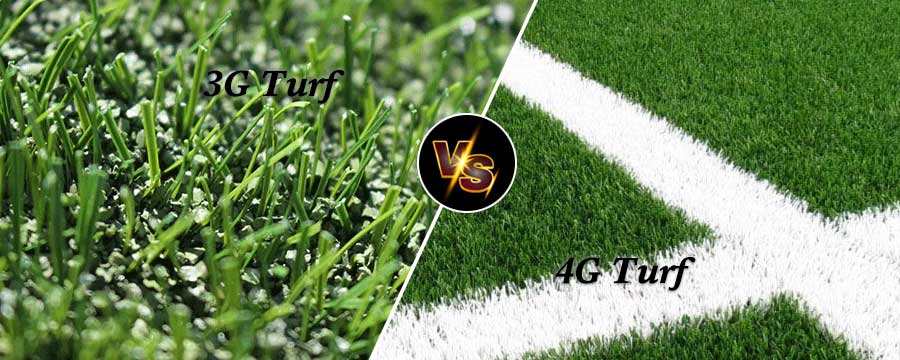
What’s different 3 G vs 4G VS 5G Football Turf?
For football field builders, 3G, 4G, and 5G are not comparable to smartphone generations where a higher number simply means a better upgrade. Instead, they represent three fundamentally different system logics:
- 3G football turf is a granular infill system (sand + rubber infill). It is technically mature, widely standardized, and easy to certify, making it well suited for high-frequency use and competition or training venues.
- Relvado de futebol 4G is a non-infill or minimal-infill high-density system. It offers a cleaner surface and reduced maintenance requirements, but requires a more cautious approach in terms of certification coverage and long-term performance data.
- 5G football turf is a sustainability- and recyclability-driven system (recyclable / mono-material design). With life-cycle management and policy compliance at its core, it is more commonly adopted in ESG-oriented projects, particularly in Europe.
“When selecting artificial turf as our playing surface, we do not focus on which ‘generation’ it belongs to. What matters most to us is whether the project can be successfully accepted and delivered, whether it complies with local laws and regulations, whether the product offers a longer service life, and whether it minimizes post-installation concerns.” — Japanese sports construction contractor
3G vs 4G vs 5G Football Turf Comparison
| Key Comparison Factors (From a Contractor’s View) | 3G Football Turf (Infill System) | 4G Football Turf (Non-Infill / High-Density System) | 5G Football Turf (Recyclable / Sustainable System) |
| System Definition | Long-pile artificial grass with sand and rubber infill, where performance and shock absorption are largely provided by the infill layer | No infill or minimal infill, relying on high-density yarn structure and system layers to deliver performance | Turf designed with recyclability and sustainability in mind, using recyclable yarn, backing, and base materials |
| Typical Applications | Schools, communities, football clubs, training centers, and competition-level pitches (most common globally) | Indoor or semi-indoor facilities, low-maintenance venues, sites sensitive to infill migration | Public projects in Europe, ESG-driven developments, sustainability demonstration projects |
| Playability & Ball Performance | Highly stable and predictable, closely replicates natural grass football behavior | More dependent on base construction and shock pad consistency; ball behavior may vary by system | Performance is secondary to sustainability goals and must be engineered through the full system design |
| Player Safety & Shock Absorption | Proven data and long-term use; cushioning can be adjusted via infill depth and shock pad | Heavily dependent on shock pad and system structure; long-term injury data varies by product | Safety depends on system configuration; often requires clearer engineering documentation |
| Certification & Acceptance | Easiest to certify and approve, with well-established testing and acceptance standards | Generally not included in FIFA certification; acceptance varies by region and project | Not covered by FIFA certification; often evaluated through project-specific or third-party testing |
| Tender & Bidding Value | For projects requiring federation, school, or competition standards, 3G is usually the safest choice | Often positioned as a low-maintenance or indoor solution; tender documents must clearly define scope and limits | Frequently used as an ESG scoring advantage rather than a mandatory technical requirement |
| Installation Complexity & Tolerance | Mature installation methods with relatively high tolerance for on-site variation | More sensitive to base flatness and system uniformity; lower margin for construction error | Requires strict coordination between materials, system design, and future recycling plans |
| Requisitos de manutenção | Regular brushing and periodic infill replenishment are required | Lower routine maintenance; mainly brushing and surface cleaning | Maintenance varies by design; additional focus on documentation and lifecycle compliance |
| Cleanliness & Infill Migration | Infill migration is a common management issue, especially in windy or high-traffic areas | Major advantage: cleaner surface, no loose infill | Typically designed to minimize loose materials, supporting easier end-of-life recycling |
| Initial Cost Structure | Includes turf, infill materials, and infill installation labor | Saves on infill cost but requires higher yarn density and precision system layers | Material and system costs may be higher, plus added investment in recycling and compliance planning |
| Long-Term Total Cost of Ownership (TCO) | Predictable long-term costs, but ongoing infill maintenance is required | Lower daily maintenance costs; however, corrective work can be expensive if performance issues arise | Strong long-term value in ESG-driven projects, but only if recycling systems are fully implemented |
| Service Life & Durability | Well-documented lifespan with extensive global references | Fewer long-term case studies; careful evaluation needed for high-intensity use | Durability depends on materials and system integrity, with focus on end-of-life reuse |
| Key Risk Factors for Contractors | Infill loss complaints, insufficient maintenance leading to performance degradation | Inconsistent base or shock pad causing unexpected playability issues | Tender documents failing to clearly define recycling responsibility and procedures |
| Recommended Selection Logic | High usage, competition standards, smooth acceptance → Choose 3G | Indoor use, cleanliness, reduced maintenance → Consider 4G | ESG targets, public procurement incentives, circular economy goals → Consider 5G |
Why Is 4G Football Turf Not FIFA-Approved?
From a FIFA certification and artificial turf system perspective, the reason 4G football turf is not FIFA-approved is not that it is unsafe or poorly engineered, but because its system logic does not align with FIFA’s current certification framework.
FIFA’s Quality and Quality Pro programs were developed specifically for infill-based football turf systems, where performance, safety, and durability are regulated through a complete system approach: turf, infill, shock pad, and base construction working together.
At present, 4G football turf systems fall outside this standardized evaluation model.
FIFA Certification Is System-Based, Not Product-Based
FIFA does not certify turf rolls alone. It certifies entire pitch systems, tested under controlled laboratory and on-site conditions, including:
- Ball rebound, ball roll, and rotational resistance
- Shock absorption and vertical deformation
- Player-surface interaction and long-term performance consistency
For 3G systems, infill plays a critical and measurable role in meeting these parameters.
4G systems, which rely on high-density yarn structures rather than infill, introduce performance variables that are more dependent on installation quality, shock pad design, and base uniformity, making standardized benchmarking significantly more complex.
Lack of a Unified, Long-Term Performance Benchmark
FIFA certification requires not only initial compliance, but also predictable performance over time under intensive use ,While many 4G systems can perform well in controlled or low-maintenance environments, the global market currently lacks:
- Sufficient long-term, high-intensity usage data across climates
- A universally accepted test methodology specific to non-infill systems
- Consistent correlation between laboratory results and real-field behavior
Without this data foundation, FIFA cannot establish a globally applicable and enforceable certification protocol for 4G turf.
Certification Focuses on Match and Training Standards, Not Maintenance Convenience
4G football turf is often promoted for its cleanliness, reduced maintenance, and infill-free design—all genuine advantages.
However, FIFA certification is designed primarily to protect:
- Match integrity
- Player safety at competition level
- Performance consistency across different venues worldwide
Maintenance convenience alone, while important for facility managers, is not a core driver of FIFA’s approval criteria.
Regulatory Caution, Not Technical Rejection
It is important to clarify that FIFA has not “rejected” 4G football turf.
Rather, FIFA has adopted a regulatory caution approach, choosing not to certify systems until:
- Performance evaluation methods are fully standardized
- Long-term field data is sufficient and repeatable
- Clear acceptance criteria can be applied consistently worldwide
This approach protects both governing bodies and contractors from future disputes related to performance or injury liability.
In short, 4G football turf is not FIFA-approved because it operates outside FIFA’s current certification structure—not because it fails to meet basic safety or usability requirements.
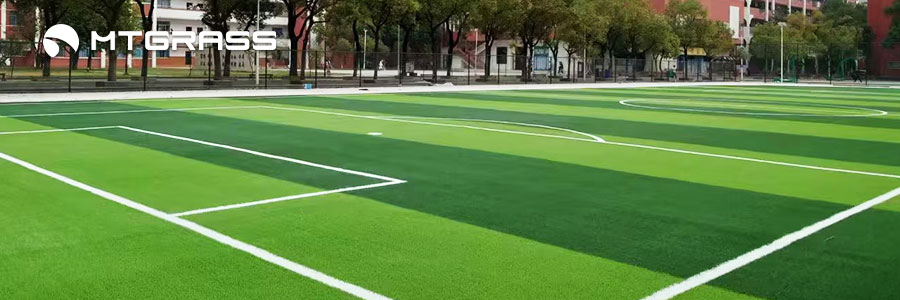
Which Artificial Turf Is Best for Your Football Field Project?
The selection of football turf systems should always be based on project requirements and intended use. For projects that require official match standards, long-term high-frequency use, and a clearly defined acceptance pathway,
- 3G football turf remains the optimal solution. For projects where low maintenance and indoor or semi-enclosed usage are the primary objectives.
- 4G football turf can be considered. In European public-sector projects or tenders with strong ESG requirements.
- 5G football turf offers clear advantages in terms of policy alignment and technical scoring.
According to statistics from multiple sports facility research institutions, approximately 60%–70% of existing artificial football fields worldwide still adopt 3G systems, which continue to dominate school, community, and club projects. At present, the FIFA Quality / Quality Pro certification system applies only to infill-based systems, giving 3G football turf a significantly higher success rate during tender evaluation and final acceptance compared to other systems.
Under field conditions with daily usage of 6–10 hours and annual usage exceeding 2,000 hours, 3G systems demonstrate greater predictability in terms of playing performance stability and safety indicators. As a result, for school, community, multi-user shared facilities, and publicly accessible football fields, 3G football turf remains the most reliable choice for risk control and long-term operation.
The core advantages of 4G football turf lie primarily in installation and maintenance. Its non-infill structure significantly reduces infill migration and routine cleaning costs, while simplifying installation, making it particularly suitable for indoor football facilities.
The core value of 5G football turf lies in its alignment with sustainability and the circular economy. In public procurement processes in certain European countries, ESG criteria account for approximately 10%–30% of total tender evaluation scores, and recyclable artificial turf offers clear advantages in material traceability and end-of-life recycling.
Ultimately, the “best football turf” is not the product with the highest specifications, but the system solution that best aligns with project objectives, regulatory requirements, and long-term operational logic.
Installation Risks and Experience with 5G Football Turf
5G football turf is designed with a strong emphasis on recyclability and material separability, offering clear advantages from an environmental perspective. However, this design philosophy also places higher demands on installation practices.
In MightyGrass’s real-world projects, we encountered a representative installation failure case. In a recyclable football turf project, after a period of use, localized areas began to show turf bubbling, surface slippage, and even overall displacement. A post-project review confirmed that the issue was not related to product quality, but was primarily caused by the following factors:
Subbase structure did not meet 5G system requirements
Recyclable football turf requires higher standards for overall subbase strength, flatness, and moisture control. If the base exhibits minor deformation or insufficient moisture regulation, turf stability can be significantly compromised over time.
Recyclable backing follows a different bonding logic than traditional systems
To enable recyclability, the backing formulation of 5G football turf reduces non-separable components. As a result, it is more sensitive to adhesive type, installation temperature, open time, and curing conditions.
In this case, the installation team applied conventional artificial turf bonding practices, which failed to establish sufficient effective bonding strength between the turf and the subbase.
Insufficient understanding of recyclable systems by the installation team
5G football turf cannot be installed by simply replicating 3G or 4G construction methods. The lack of specialized training and system-specific installation validation was a key contributing factor to the failure.
Expert Insight
5G football turf should not be regarded as a “low-risk, conventional product.”
It is better suited for projects with strong subbase conditions, clearly defined technical solutions, and installation carried out by experienced teams.
System-level technical briefings are essential prior to installation, including subbase acceptance standards, bonding solutions, environmental condition requirements, and contingency plans.
5G systems are not recommended for first-time use in projects with tight schedules or uncontrollable site conditions.
Where necessary, small-scale samples or partial trial installations should be conducted instead of full-field installation.
From an engineering perspective, 5G football turf is a high-threshold, high-requirement system solution. Only when subbase quality, material selection, and construction expertise are all aligned can its sustainability benefits and long-term value be fully realized.
Perguntas frequentes
What is the real difference between 3G, 4G, and 5G football turf?
3G turf uses sand + rubber infill, making it the traditional system with consistent ball behavior and shock absorption. 4G turf is non-infill or minimal-infill, offering a cleaner surface and lower maintenance but not standardized by governing bodies. 5G turf focuses on recyclability and sustainability, designed for eco-friendly lifecycle management.
How does ball behavior differ on 3G, 4G, and 5G turfs?
3G turf’s infill tends to provide predictable ball roll and bounce, similar to natural grass, while ball behavior on 4G and 5G systems can vary more based on yarn density and base construction.
Is 5G turf more sustainable than 3G or 4G?
Yes. MightyGrass 5G turf is designed with fully recyclable materials, aligning with environmental and ESG objectives throughout its life cycle — from production to disposal.
Is one turf type safer for players than another?
Generally, all well-designed turf types can be safe. 3G’s long-standing standardization and shock absorption are proven in high-use settings, while 4G and 5G safety depends on system engineering and installation quality rather than generation number alone.
Which turf should I choose for my football field project?
It depends on your priorities:
- 3G — Best choice for official competitions, consistent playability, and certification.
- 4G — Great for indoor, low-maintenance, clean environments.
- 5G — Ideal if sustainability and recyclability are key project goals.


